

By Terre Haute News Staff | November 7, 2026 | Local news analysis and commentary
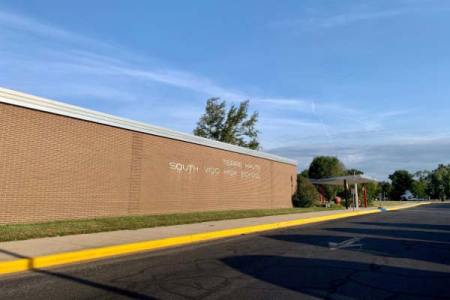
TERRE HAUTE, Ind. — Vigo County’s proposed $222 million high school is not just a construction project. It is a test of whether school officials, county leaders and casino-backed donors can agree on how to pay for a new building that would combine Terre Haute North and South Vigo high schools—while continuing to serve students at West Vigo.
This time, unlike the school-facilities referendum rejected by voters in 2022, the proposal was designed around existing school financing, a major casino-foundation commitment and proposed county support, without asking voters to approve a new school property-tax increase for this project. That distinction matters. So does a second one: not every proposed county dollar came from casino revenue.
What the $222 million actually covers
Gibraltar Design’s February 12, 2026 preliminary estimate put the new high school east of the Wabash River at $222,187,000. The presentation broke the estimated budget into sitework and athletic campus costs, the building itself, contingency and other project expenses, including design and equipment. It was a preliminary construction-bond budget for the proposed new east-side high school—not the price of every districtwide school change, nor a final construction bid.
Under the school board’s preferred configuration, North and South would be consolidated at a newly built east-side campus. The current North and South facilities could be repurposed for younger students, while West Vigo High School would stay open and undergo modernization. The broader district plan also contemplated changes to elementary and middle schools. Exact implementation depends on funding and further decisions.
The six cost options officials already showed the public
The February 2 Facility Plan Oversight Committee materials compared six options. Those comparisons were publicly disclosed; the legitimate question is what they mean for the decision, not whether officials hid them. Below are the preliminary projections, rounded to two decimal places. “Fund savings” combines estimated education, operations and food-service fund savings over ten years; “capital savings” compares construction expenditure scenarios with renovating all three existing high schools. These are different measures and should not be added together as if they were cash on hand.
| Plan | 10-year fund savings | Capital savings vs. renovating all three |
|---|---|---|
| 1. One new countywide high school | $177.97 million | $110.26 million |
| 2. One countywide high school at North | $184.76 million | $162.89 million |
| 3. Renovate all three existing high schools | Baseline | Baseline |
| 4. North and West Vigo | $153.19 million | $100.39 million |
| 5. South and West Vigo | $103.45 million | $40.15 million |
| 6. New east-side school and West Vigo | $146.40 million | $58.88 million |
Two single-countywide-school configurations projected larger ten-year fund savings than the preferred option 6. The North-based single-school configuration also showed the largest projected capital savings. The school board may have reasons to favor two high schools—geography, transportation, West Vigo’s identity and educational access among them. But taxpayers deserve a plain explanation of the trade-off. If the numbers favor another configuration, show the public why the preferred choice is still the better one.
Where the casino and county money fit
On July 20, the Terre Haute Casino Foundation announced a proposed $94 million commitment over 20 years: $10 million upfront and an estimated $4.2 million annually. The proposal offered an unusually substantial funding opportunity for school facilities, subject to the necessary arrangements and approvals.
County commissioners separately discussed $15 million upfront and $6 million per year for 20 years. Reporting on the proposed county contribution identified existing public revenue sources, including the county’s economic development income tax (EDIT) fund. That proposed county commitment should not be described as entirely casino money, and it was not the same pledge as the foundation’s $94 million. Funding arrangements had not been finalized.
The school corporation also discussed using its own bonding capacity. None of these figures by itself proves the whole facilities program is fully financed; the timing, legal commitments and ongoing costs all matter.
The county budget drama—and what is still unresolved
Late-October disagreements about the 2027 county budget complicated the school partnership. After a disputed October 26 vote, the county council adopted a revised 2027 budget on November 2. That resolved the immediate budget-adoption showdown, but it did not settle the proposed school-construction contribution. County Commissioner Chris Switzer said the school-funding resolution remained negotiable.
The financing question therefore remained: could county government, the school corporation and the casino foundation reach terms that would keep this investment opportunity alive? A foundation pledge is encouraging. A resolution discussed at a meeting is encouraging. Neither is quite the same thing as a signed, executable financing agreement.
Editorial: a little less theater, a lot more arithmetic
Vigo County has spent years discussing what to do about aging school buildings. The latest plan arrived with public cost comparisons, a possible nine-figure contribution from the casino foundation and a path that did not depend on another new school property-tax referendum. That should have been an opportunity for a serious public debate about trade-offs.
Instead, local government managed to turn the financing into another cliffhanger. Apparently, the only thing Vigo County can reliably consolidate is its meetings.
What officials have answered—and what they still owe Vigo County
Why keep two high schools? This question has been answered in principle. At the March 26, 2026 oversight board meeting, Superintendent Chris Himsel said county geography, the Wabash River and families seeking a smaller high-school experience weighed against a single countywide school. The preferred plan would keep West Vigo High School while combining North and South east of the river and converting their existing buildings into middle schools. Those are substantive educational and community considerations—not mysteries officials have refused to discuss. But we still have not found a comprehensive quantified comparison showing why those benefits justify the additional projected costs relative to the highest-saving alternatives.
Which dollars would pay for it? The proposed sources are no secret: casino-foundation support, county revenue including the economic development income tax (EDIT) fund, and school financing. The difficulty is turning proposals into commitments. As of the November 2 budget decision, Commissioner Chris Switzer said the county’s Resolution 2026-2—with its initially proposed $15 million upfront and $6 million annually—could still be negotiated. A final, binding agreement specifying the amount, duration and conditions of the county’s contribution remained the missing piece.
What if the funding falls through? School leaders have discussed alternatives, so it would be inaccurate to suggest they never considered a backup. On October 26, Himsel said the school board might need to reconsider one countywide high school. School finance officials also raised the possibility that keeping West Vigo could require a property-tax referendum without substantial county help. Neither option had become a final adopted fallback plan in the available reporting, and Himsel cautioned that the district’s own bonding capacity, without foundation help, was not enough by itself for either proposed new-school option.
The real remaining questions are narrower—and harder to dodge: Where is the detailed cost-benefit justification for choosing the two-school configuration? Where is the signed, enforceable funding agreement? And which workable alternative will the board actually adopt if the partnership collapses?
Vigo County does not need another round of officials pretending these questions have never been asked. The superintendent has explained his preference. County officials have identified potential revenues. School leaders have acknowledged what losing the money could mean. Now they need to make the decisions, secure the commitments and account for the trade-offs.
Documents and reporting
Vigo County Facility Plan Oversight Committee: February 2 feasibility cost comparisons
Vigo County Facility Plan Oversight Committee: February 12 new high school feasibility presentation
WTHI: Casino foundation announces $94 million commitment (July 20)
WTHI: County-school financing discussions (September 29)
WTHI: Revised county budget adopted; school partnership remains open (November 2)
WTHI: October 26 school officials discuss a one-high-school alternative and possible referendum
For earlier background and the original debate, see our 2022 school-construction analysis, updated with subsequent developments.
Leave a Reply